
From Advice Article to the Right Bike: How VELOGROUP Uses eChat on Magento 2 + Hyvä
-
 Oleksandr Drok
- E-commerce Tips & Best Practices
- Nov 16, 2026
- 12 min read
When parents choose a bike for their child, wheel size and frame material are not enough. They have to think about the child's height, the route to school, riding experience, budget and a few other things they may not even consider at the start.
VELOGROUP tries to help with this before the shopper ever opens the catalog. The company has built and continues to expand a large section of expert content, describes every bike in detail and explains who each model is right for. With eChat, the AI module for Magento by Mirasvit, VELOGROUP wants to help shoppers move from general advice to a specific choice.
This case shows how much unique expert content still matters to shoppers, even in the age of AI. It is what search engines and AI assistants cite, so it is a core part of SEO and GEO. VELOGROUP uses the same content twice: first to be found in Google and in AI answers, then inside eChat, where it helps the shopper go from a question to the right bike. Together, the content and the AI assistant cover the whole path to a purchase.
The case at a glance
- Merchant: VELOGROUP BV, the Netherlands. Three bicycle stores, six store views for the Netherlands and Belgium.
- Platform: Magento 2 + Hyvä, hosted on Hypernode. The new platform has been live since May 1, 2026.
- What was done: the eChat AI assistant went live on Velokinderfiets.nl and Velofiets.nl, each with its own rules and assortment. VELOGROUP's Magento installation holds around 600 bikes across its stores, and each eChat workspace receives only the assortment of its own storefront. The assistant also answers from about 100 expert advice pages.
- What changed: after reading an advice article, a shopper can describe their situation in the chat and get 2–3 matching bikes with an explanation.
- Stage: phase 1, implementation and first learnings. We will update this case after the 2027 bicycle season with usage and conversion data.
First, content that actually helps people choose
After the previous Magento setup had become outdated and VELOGROUP had lost much of its earlier online visibility, owner Paul Walraven decided to rebuild the e-commerce platform from the ground up on Magento 2 and Hyvä. The catalog was rebuilt with around 600 bicycle products, and the new platform has been live since May 1, 2026.
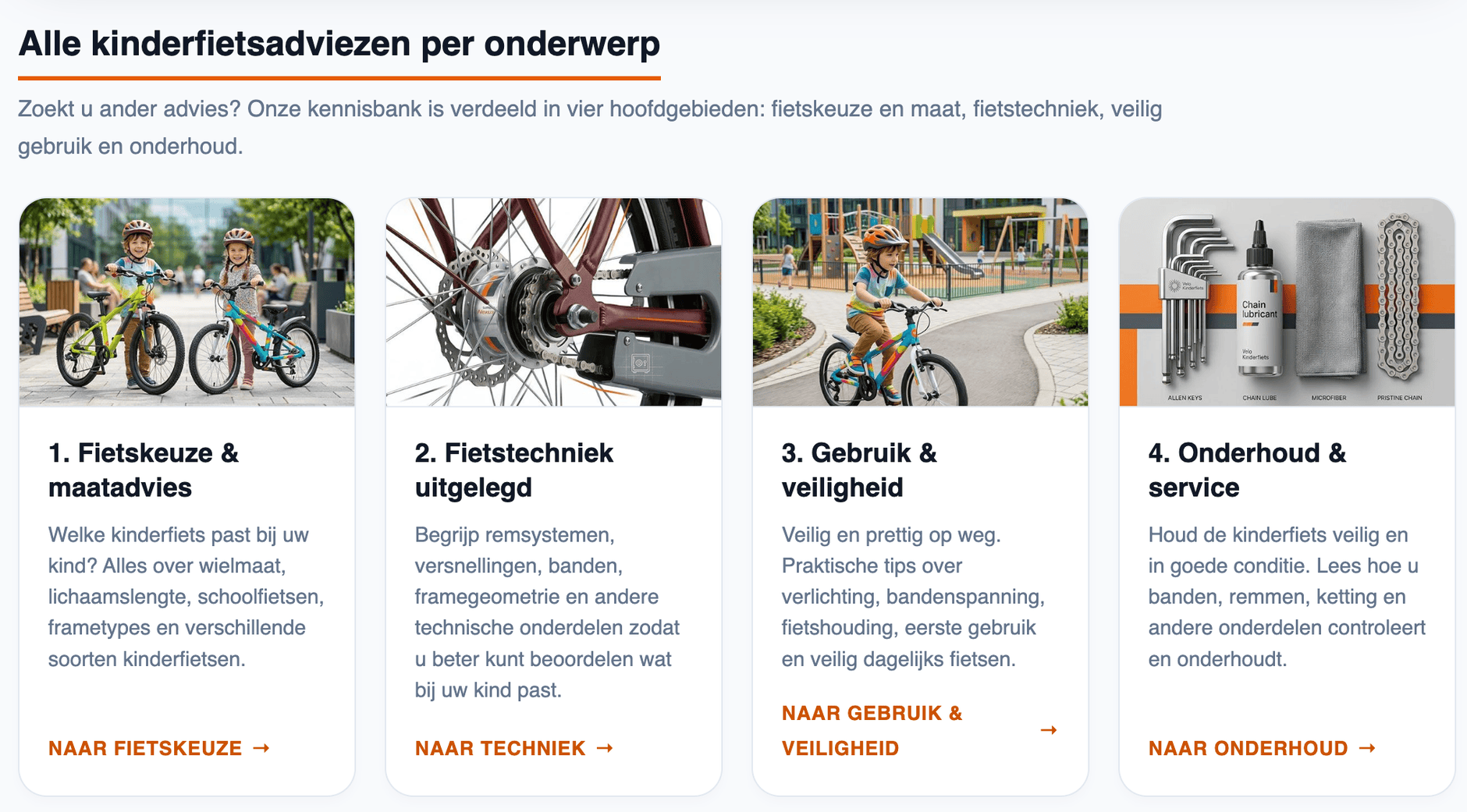
A separate part of the work is content for shoppers. The Magento store has about 100 expert CMS pages grouped by topic: choosing the size, how a bike is built, use and safety, maintenance. There is also a separate section on electric children's bikes, which starts with a basic question: does your child need an electric bike at all?
Product pages follow the same logic. Next to the specs table, they explain how to use the bike, what to do if you are unsure about the size, and who this model may not be right for. VELOGROUP's approach is to go beyond photos and specifications and help the shopper make the decision.
AI assistants have already started citing this content. At first they mostly used VELOGROUP's size table, and later they began referring to its answers to everyday questions from parents. The VELOGROUP team also monitors bicycle discussions on Reddit, compares recurring customer questions with the expert pages and uses those insights to expand the content.
But even useful content does not always help with the last step to a purchase.
Between a useful article and a specific product
Imagine parents have just read an article about brakes on children's bikes. Now they understand what to look for. But which bike in a catalog of hundreds is right for their child?
Adding links to specific bikes in every section of an article by hand is not practical. Every shopper's requirements are different: the child's height, daily distance, whether they want gears, budget. Every combination would need its own selection, and someone would have to keep it up to date.
Paul puts it simply:
"I cannot include a link to a real bicycle in each chapter. That would be very annoying for customers. But I don't want to give only good content. In the end, I want them to buy the right bike."
Paul Walraven, owner of VELOGROUP BV
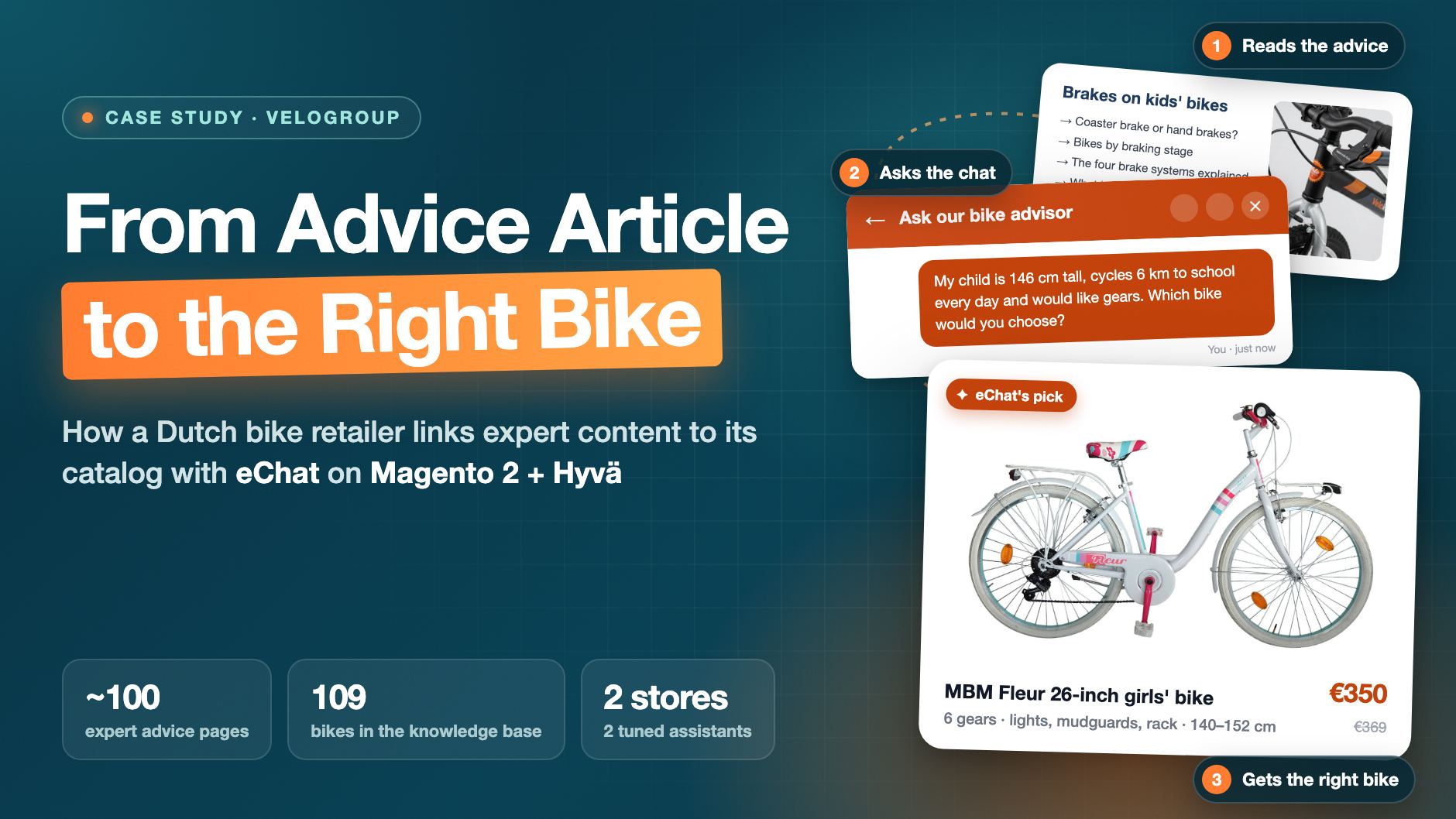
This is where eChat comes in. A shopper can ask a question in plain language, for example: "My child is 146 cm tall, cycles 6 km to school every day and would like gears. Which bike would you choose?" The assistant has to match these requirements with the catalog, product pages and expert content, then suggest a few suitable models and explain the difference between them.
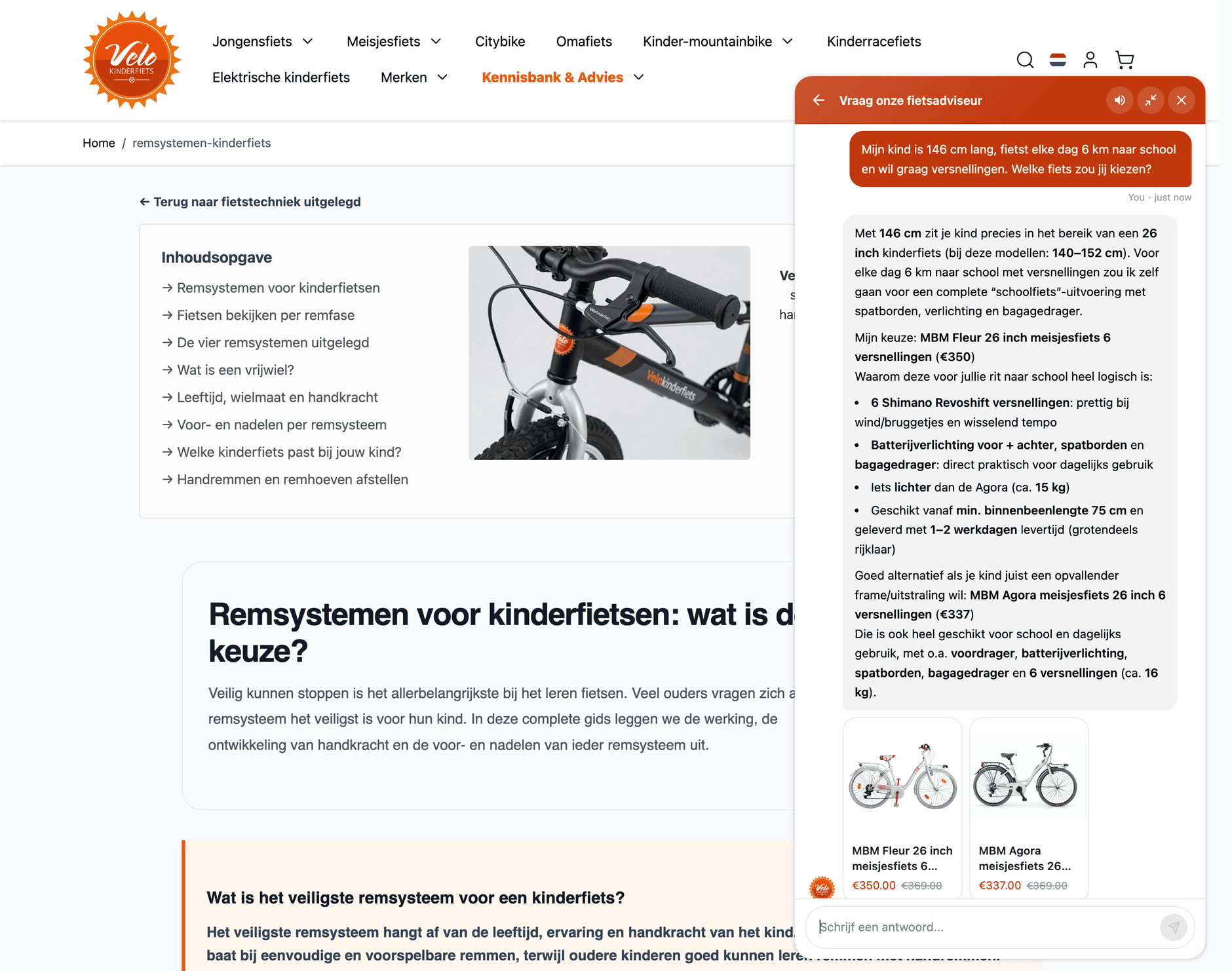
For the store, this does not replace the content or the catalog. It helps the shopper use both together.
Setup matters more than just switching the chat on
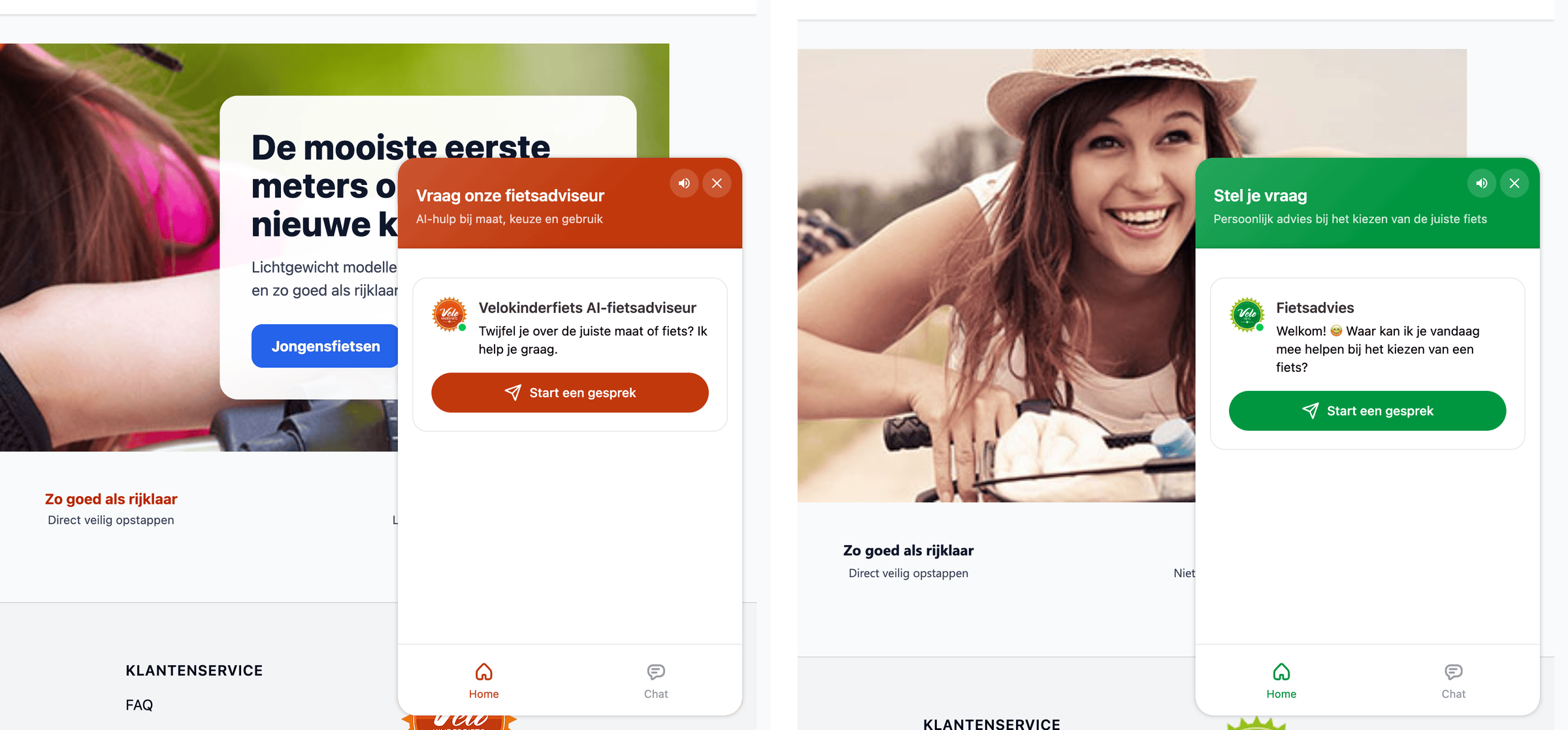
VELOGROUP runs eChat on two sites: Velokinderfiets.nl, dedicated to children's bikes, and Velofiets.nl, which sells affordable bikes for adults. The sites have different positioning, different audiences and different requirements for the assistant's answers.
For example, on Velokinderfiets.nl the assistant is explicitly told not to recommend adult models. On Velofiets.nl it works with a different assortment and its own branding. So setup is not just about picking a friendly tone. The assistant has to understand which store it works for, which products are relevant and what information its recommendations should be based on.
Both sites run on one Magento installation, with products split between them. eChat follows that split: each storefront gets its own knowledge base with only the products assigned to that website. The Velokinderfiets.nl assistant works with 109 children's bikes, while the adult models stay with the Velofiets.nl assistant.
This way the instructions and the data work together. Ask the Velokinderfiets.nl assistant for a 28-inch ladies' bike, and the instruction keeps it from offering adult models. Ask it directly, "Do you sell the MBM Touring ladies' bike?", and it answers that this bike is not in the assortment, because the bike is not in its knowledge base at all. If a store needs more separation, each store view can also have its own eChat workspace, with its own settings and conversations.
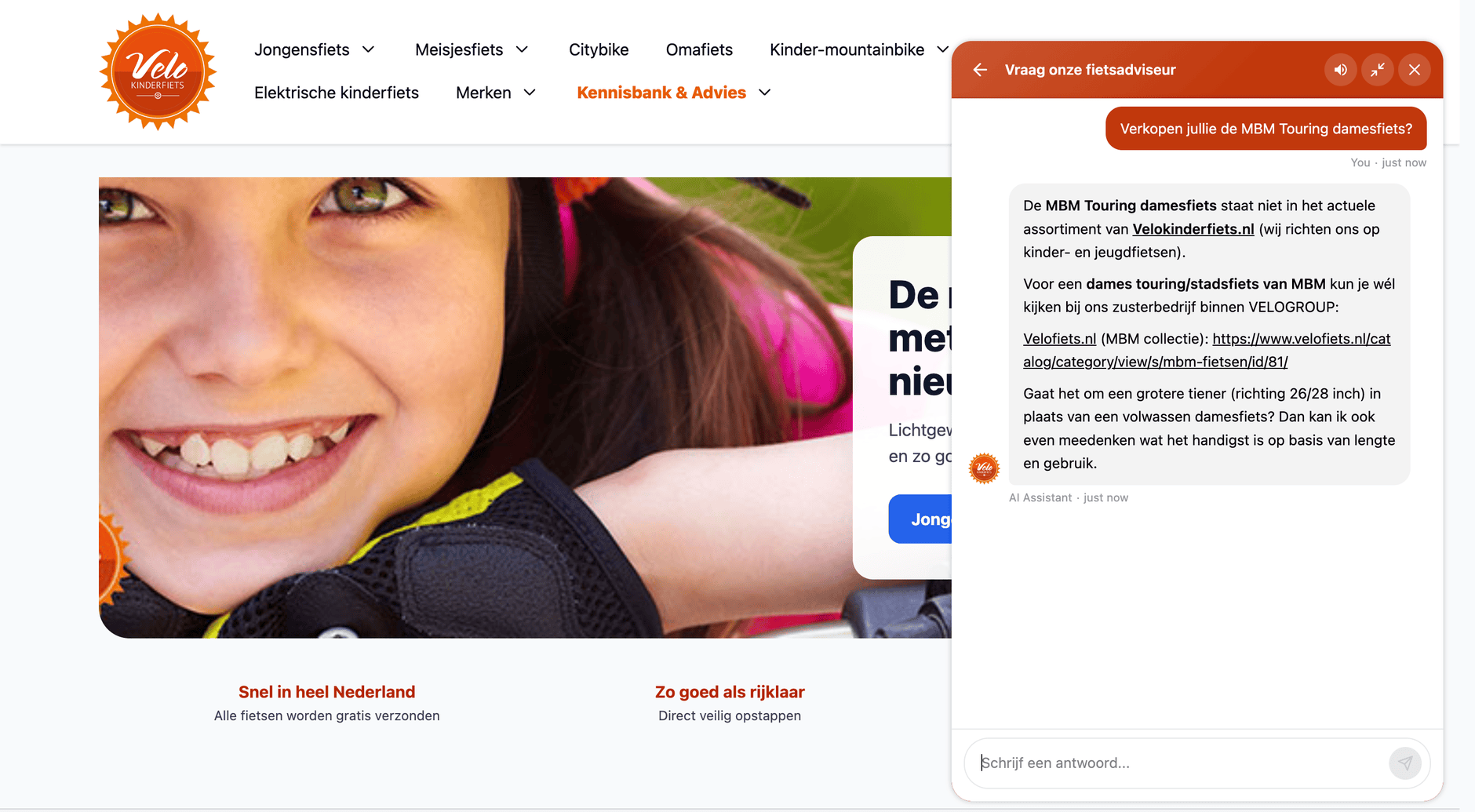
This split itself came out of a feedback loop between VELOGROUP and the Mirasvit team. A live Magento 2 + Hyvä multi-store reveals edge cases that are hard to reproduce in a demo store. During the first Velokinderfiets.nl sync, the knowledge base held 188 product documents, because products assigned to other VELOGROUP websites were included too. Mirasvit corrected the website-assignment logic the same day: the workspace kept the intended 109 products, the other 79 were removed, and VELOGROUP checked the result with the same shopper questions. Several other findings from VELOGROUP also turned into fixes or beta builds that could then be validated again in the same real-world store environment.
This matters for any store with several websites or store views. A text rule like "do not recommend adult bikes" helps, but the assistant can only be as accurate as the data it sees. Before launch, check which products and pages the assistant sees on each storefront, and ask it a few direct questions about products from the neighboring sites.
The chat shows what content to add next
Expert content and the chat feed each other. The same pages that help VELOGROUP get found in Google and in AI answers are what eChat answers from. And the conversations in eChat show VELOGROUP where those pages and product data can be improved.
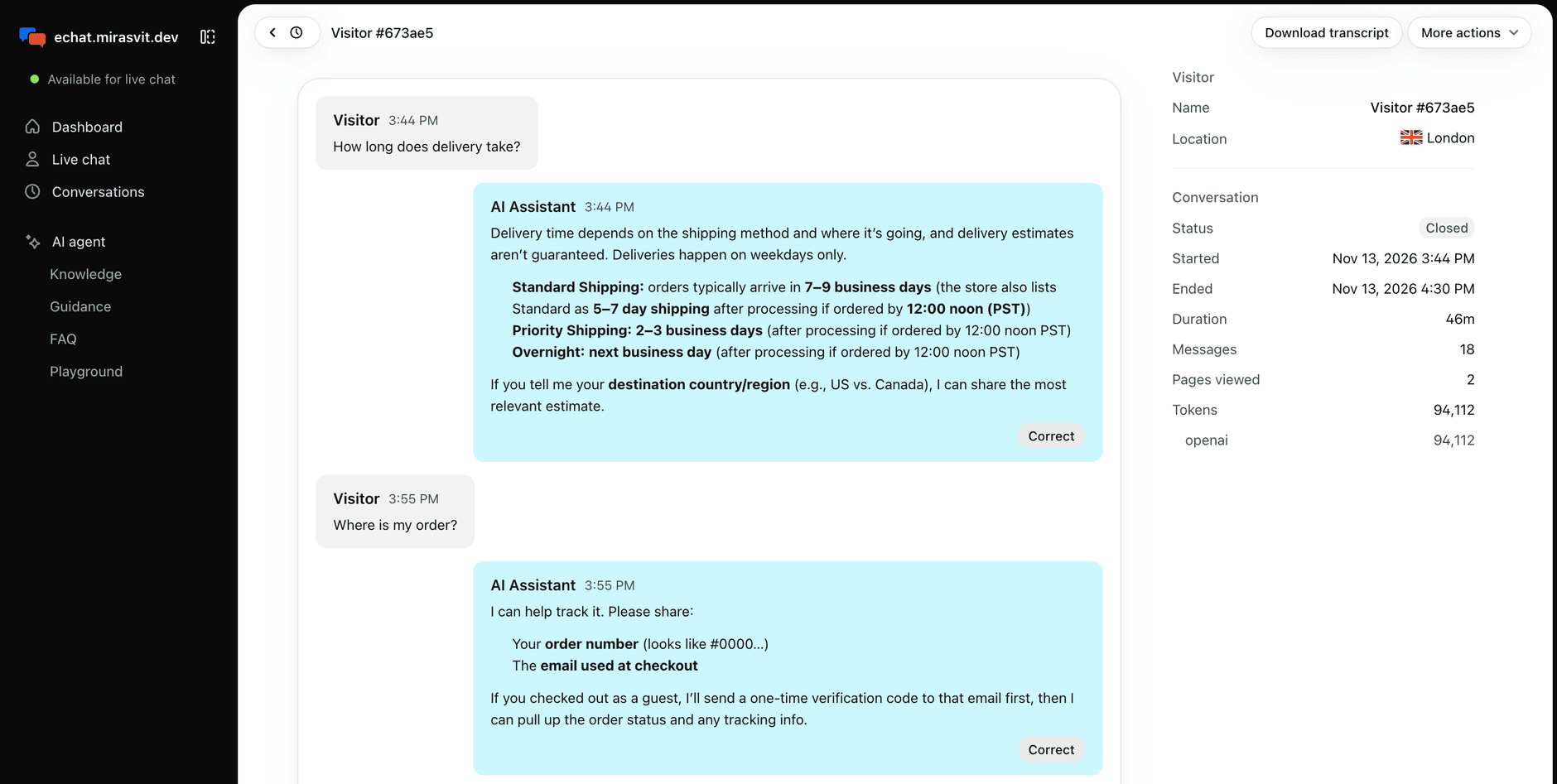
In the conversation history, the team sees:
- questions parents ask again and again;
- words they use that are not in the product texts or attributes;
- product details shoppers need but the catalog does not have;
- places where the assistant struggled to find or interpret an answer.
Each of these becomes a task: expand an advice page, add an FAQ answer, fill in a product attribute. The improved content then works twice: in search and AI answers, and in the chat itself.
This complements VELOGROUP's broader customer and market research. Reddit shows what parents discuss in general. The chat shows what visitors to VELOGROUP's own stores ask, in their own words, right before they choose a bike.
What to check before launch
VELOGROUP's experience points to a few things a Magento merchant should think through in advance.
- Which sources should the assistant use? The catalog is only part of the answer. For products that are hard to choose, instructions, articles, FAQs and detailed product page explanations can matter just as much.
- Does the data match each storefront? If several sites run on one installation, ask the assistant a few questions about products from a neighboring site and make sure it does not offer them.
- How fresh is the data? eChat updates its knowledge base once a day, overnight. A price or description changed during the day will appear in the chat the next morning. For most catalogs that is enough, but if your prices change several times a day, plan for it.
- Is the FAQ right for your scenario? The assistant prefers answers from the FAQ, but it phrases them in its own words. If the business needs exact wording, for example for return conditions, it is better to link to the page that has it.
- How will costs be controlled? With eChat, AI costs stay in your hands. You pay your AI provider directly, choose the provider and model that fit your budget (OpenAI, Anthropic, Google or xAI), and set your own spending limit in the provider account. VELOGROUP sells only in the Netherlands and Belgium, so the company suggested showing the chat only to visitors from those countries. This idea, together with limits on new conversations, is now on the eChat development plan.
These checks do not guarantee perfect answers. They help you work out which data and processes the assistant needs to behave predictably in a real store.
What's next: the first season with the chat from day one
Bikes in the Netherlands sell by season. The store launched in May, and eChat arrived in the autumn, when the season was already ending. That is why VELOGROUP does not quote conversion figures yet: a few weeks at the end of a season would say very little.
The next season, though, VELOGROUP will start with the chat already set up. In February manufacturers release new models, and over the winter the team adds them to the catalog. When shoppers come for bikes in spring, the assistant will already know the new models, the rules of each store and the questions parents asked in the autumn.
VELOGROUP has three priorities for the coming season:
- Measure from day one. VELOGROUP plans to track chat openings, meaningful conversations, product recommendations, clicks from the chat to product pages, add-to-cart actions and orders after a chat.
- Put the chat where decisions are made. The team wants the assistant available on the page of a specific bike, where parents have their last doubts: "my child is very active, is this the right model for them?"
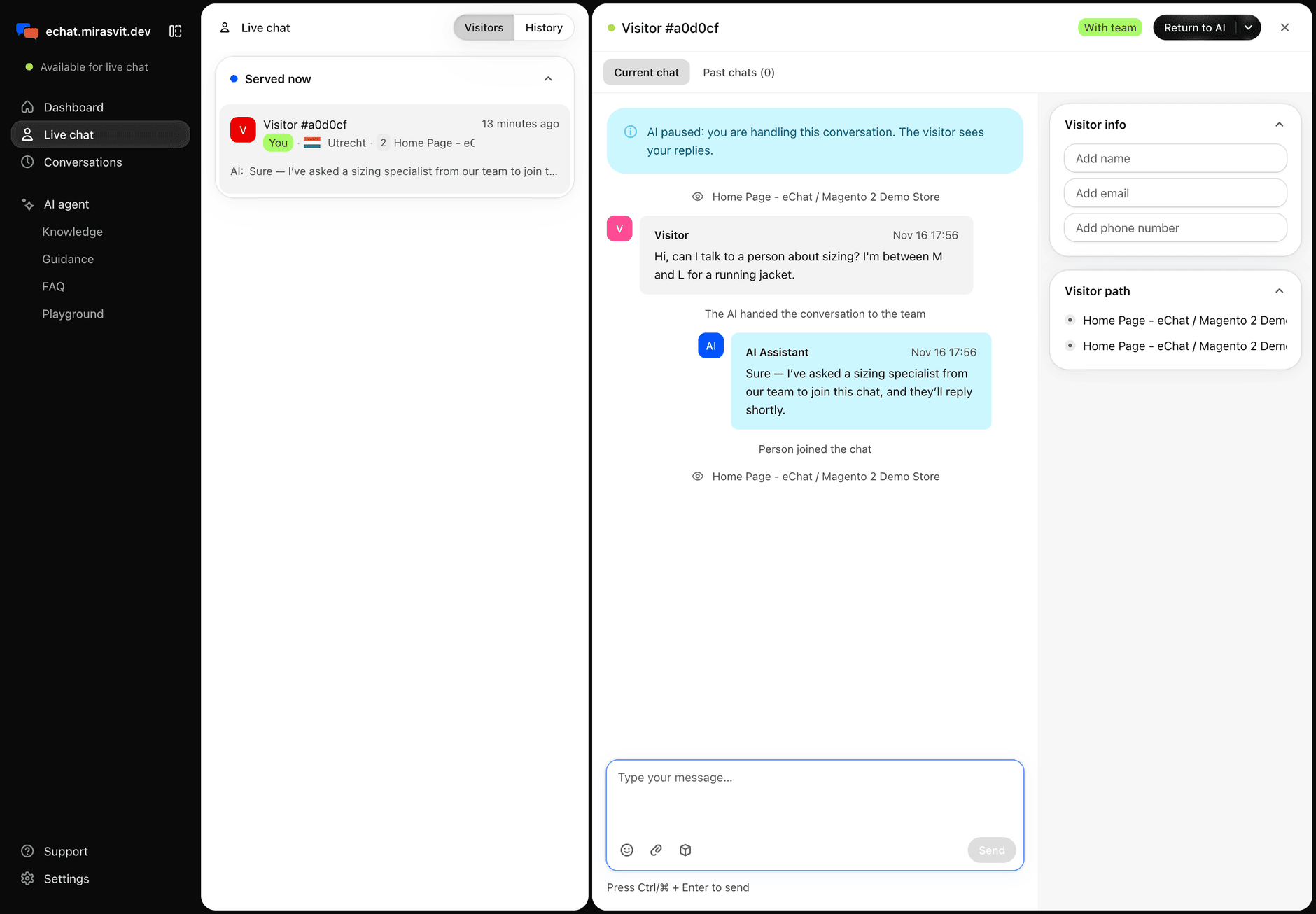
- Add human support when the shopper is ready. The AI handles the first questions, and when the conversation gets close to a purchase or the shopper asks for a person, a VELOGROUP team member can take over. eChat already has live chat for this: the AI stays silent while a person answers, and it can draft replies for them. If nobody is available, the shopper leaves a message and it arrives by email.
For other merchants, the order is what matters. First decide which shopper behavior the chat should change: reaching the product, fewer doubts, a faster choice. Then measure exactly that. The number of chat messages on its own does not mean sales.
See eChat in action
VELOGROUP's stores show what eChat can do when real expert content stands behind it. VELOGROUP has also described the collaboration from the merchant side on Velokinderfiets.nl and Velofiets.nl.
To try the assistant yourself, open the eChat demo store and ask it a question the way a shopper would. Or visit Velokinderfiets.nl or Velofiets.nl to see eChat running in a real Magento storefront. The stores are in Dutch, but the assistant also answers in English. Learn more about the module on the eChat for Magento 2 page.
VELOGROUP's story does not yet answer how much eChat will increase sales: that is the question for phase 2 of this case. What it does show is that practical work with an AI assistant does not start with the chat itself. It starts with content, data, clear rules and a willingness to improve them based on shoppers' questions. That is what to set up before expecting measurable results from AI.
Want your store to be our next case?
VELOGROUP approached Mirasvit proactively, implemented the modules in a live Magento environment and shared detailed findings from daily use. Together, the two teams turned that real-world feedback into fixes, beta builds and product improvements.
If you use eChat or other Mirasvit modules and have something to show, write to us. We will tell your store's story on our blog and LinkedIn, just like this one.
Head of Product at Mirasvit